
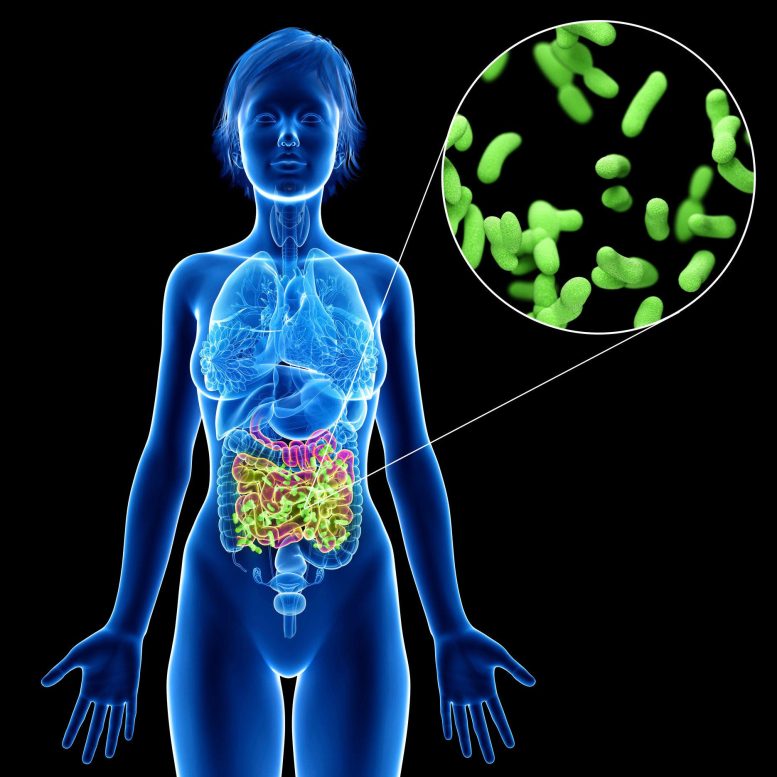
Gut Bacteria and Diabetes Risk
An ongoing study led by Cedars-Sinai has demonstrated that certain gut bacteria may increase the risk of Type 2 diabetes while others may provide protection against it. These are early results from a prospective study.
According to the study, which was published in the journal Diabetes, higher levels of the bacterium Coprococcus are associated with improved insulin sensitivity, while higher levels of Flavonifractor in the gut microbiome are linked to decreased insulin sensitivity.
For years, investigators have sought to understand why people develop diabetes by studying the composition of the microbiome, which is a collection of microorganisms that include fungi, bacteria, and viruses that live in the digestive tract. The microbiome is thought to be affected by medications and diet. Studies have also found that people who don’t process insulin properly have lower levels of a certain type of bacteria that produces a type of fatty acid called butyrate.
The Microbiome and Insulin Longitudinal Evaluation Study (MILES)
Mark Goodarzi, MD, Ph.D., the director of the Endocrine Genetics Laboratory at Cedars-Sinai, is leading an ongoing study that is following and observing people at risk for diabetes to learn whether those with lower levels of these bacteria develop the disease.
“The big question we’re hoping to address is: Did the microbiome differences cause diabetes, or did diabetes cause the microbiome differences?” said Goodarzi, who is the senior author of the study and principal investigator of the multicenter study called Microbiome and Insulin Longitudinal Evaluation Study (MILES).
Investigators involved in MILES have been collecting information from participating Black and non-Hispanic white adults between 40 and 80 years of age since 2018. An earlier cohort study from the MILES trial found that birth by cesarean section is associated with a higher risk of developing prediabetes and diabetes.
For the most recent study to come out of this ongoing trial, investigators analyzed data from 352 people without known diabetes who were recruited from the Wake Forest Baptist Health System in Winston-Salem, North Carolina.
Study participants were asked to attend three clinic visits and collect stool samples prior to the visits. Investigators analyzed data collected at the first visit. They conducted genetic sequencing on the stool samples, for example, to study the participants’ microbiomes, and specifically look for bacteria that earlier studies have found to be associated with insulin resistance. Each participant also filled out a diet questionnaire and took an oral glucose tolerance test, which was used to determine the ability to process glucose.
Investigators found 28 people had oral glucose tolerance results that met the criteria for diabetes. They also found that 135 people had prediabetes, a condition in which a person’s blood sugar levels are higher than normal but not high enough to meet the definition of diabetes.
The Impact of Butyrate-Producing Bacteria
The research team analyzed associations between 36 butyrate-producing bacteria found in the stool samples and a person’s ability to maintain normal levels of insulin. They controlled for factors that could also contribute to a person’s diabetes risk, such as age, sex, body mass index, and race. Coprococcus and related bacteria formed a network of bacteria with beneficial effects on insulin sensitivity. Despite being a producer of butyrate, Flavonifractor was associated with insulin resistance; prior work by others has found higher levels of Flavonifractor in the stool of people with diabetes.
Investigators are continuing to study samples from patients who participated in this study to learn how insulin production and the composition of the microbiome change over time. They also plan to study how diet may affect the bacterial balance of the microbiome.
Goodarzi emphasized, however, that it is too early to know how people can change their microbiome to reduce their diabetes risk.
“As far as the idea of taking probiotics, that would really be somewhat experimental,” said Goodarzi, who is also the Eris M. Field Chair in Diabetes Research at Cedars-Sinai. “We need more research to identify the specific bacteria that we need to be modulating to prevent or treat diabetes, but it’s coming, probably in the next five to 10 years.”
Reference: “Butyrate-Producing Bacteria and Insulin Homeostasis: The Microbiome and Insulin Longitudinal Evaluation Study (MILES)” by Jinrui Cui, Gautam Ramesh, Martin Wu, Elizabeth T. Jensen, Osa Crago, Alain G. Bertoni, Chunxu Gao, Kristi L. Hoffman, Patricia A. Sheridan, Kari E. Wong, Alexis C. Wood, Yii-Der I. Chen, Jerome I. Rotter, Joseph F. Petrosino, Stephen S. Rich and Mark O. Goodarzi, 12 August 2022, Diabetes.
DOI: 10.2337/db22-0168
The study was funded by the National Institutes of Health, the National Institute of Diabetes and Digestive and Kidney Diseases, and the National Center for Advancing Translational Sciences (NCATS)
Never miss a breakthrough: Join the SciTechDaily newsletter.
Follow us on Google and Google News.
2 Comments
“Gut bacteria may play a role in Diabetes”?!
DUH! And gazing lluons of all other diseases too you will find out. So don’t make a drug to fix one certain disease.
Strengthen the Immune system. Don’t kill it with antibiotics and NSAIDS, etc.
Investigate healthy people’s guts, poop, saliva, and blood VERSUS sick people of all sorts. Find a way to help digestive systems!
And then teach Doctors how to HEAL guts instead of prescribing pills that treat symptoms! Get to the ROOT CAUSE of symptoms- which will be inadequate digestion and a poor diet. DUH.
“Gut bacteria may play a role in Diabetes”?!
DUH! And gazillions of all other diseases too you will find out. So don’t make a drug to fix one certain disease.
Strengthen the Immune system. Don’t kill it with antibiotics and NSAIDS, etc.
Investigate healthy people’s guts, poop, saliva, and blood VERSUS sick people of all sorts. Find a way to help digestive systems!
And then teach Doctors how to HEAL guts instead of prescribing pills that treat symptoms! Get to the ROOT CAUSE of symptoms- which will be inadequate digestion and a poor diet. DUH.